
Legends Legal Marketing | May 18, 2026 | Motorcycle Accident
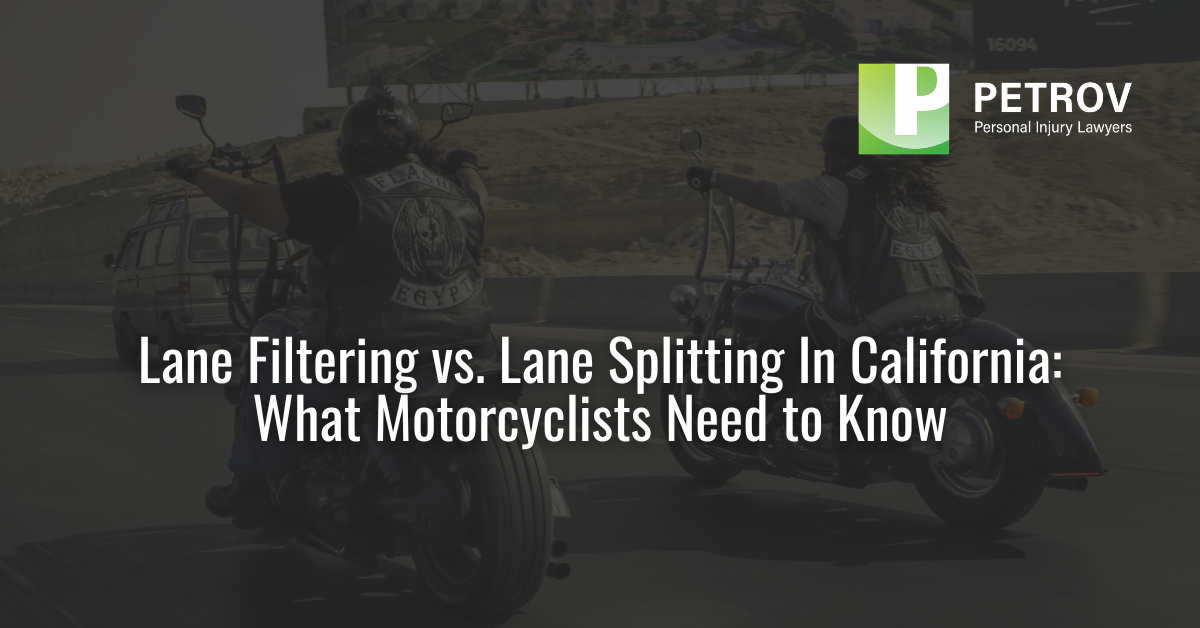
In California, the terms “lane filtering” and “lane splitting” are used interchangeably, but they are not the same thing. If you are a motorcyclist in California, knowing when and how each practice is allowed can help you avoid legal trouble and protect yourself if something goes wrong.
Petrov Law Firm can provide trusted guidance and real support. We have helped people across California navigate complex accident claims, ensuring their voices get heard and their rights are upheld.
Lane Filtering vs Lane Splitting in California
Lane splitting is legal under California Vehicle Code Section 21658.1, which allows motorcyclists to ride between lanes of moving traffic when done safely.
Lane filtering, riding between stopped or very slow-moving vehicles at intersections, is generally treated as a subset of lane splitting under this same statute, though the term itself does not appear in the Vehicle Code. In either case, fault in an accident will depend on whether the rider acted reasonably under the circumstances.
Lane Splitting Rules
The California Highway Patrol (CHP) guidelines advise that riders should consider:
- Account for lane width, vehicle sizes, road, weather, and lighting conditions
- Slow down, as danger increases as the overall speed increases
- Split between the far left lanes
- Avoid lane splitting next to large vehicles, like buses and motorhomes
- Stay visible by avoiding blind spots, and don’t linger between vehicles
- Wear brightly colored or reflective gear and use your high beams during daylight
- Avoid riding on the shoulder, which is illegal and not considered lane splitting
- Only attempt lane splitting if you are an experienced rider
Lane Filtering
Because the term is not explicitly defined, ambiguity can create complications after an accident. If a crash occurs while filtering, your insurance company may scrutinize your behavior more closely, especially if:
- Traffic was not fully stopped at the time
- You moved unpredictably between vehicles
- Drivers were not given adequate time to react
Is Lane Splitting or Filtering Safe?
Motorcyclists often argue that these practices can actually reduce the risk of rear-end collisions by keeping them out of the crumple zone between vehicles in stop-and-go traffic. But even a brief distracted moment can lead to a serious crash. Drivers may:
- Fail to check blind spots
- Open doors unexpectedly
- Change lanes without signaling
. Determining responsibility in these situations often comes down to detailed evidence and the behavior of those involved leading up to the accident.
Who Is at Fault in a California Lane Splitting or Filtering Accident?
California follows a pure comparative negligence system, established by the California Supreme Court in Li v. Yellow Cab Co., 13 Cal.3d 804 (1975). This means fault can be shared between multiple parties, and you can still recover compensation even if you were partially at fault. Your award is simply reduced by your percentage of responsibility. For example, a driver who changes lanes without signaling may bear significant responsibility, and a motorcyclist speeding aggressively between lanes may also share fault.
Insurance companies will look at:
- Speed of the motorcycle
- Traffic conditions
- Whether the rider was visible
- Driver actions (e.g., sudden lane changes)
- Road design and visibility
Even if you were lane splitting legally, you could still be partially liable if your actions contributed to the crash.
What Should You Do After a California Motorcycle Accident?
If you’re involved in an accident while lane splitting or filtering, your next steps can help preserve evidence and protect your claim:
- Seek medical attention immediately, even if your injuries seem minor
- Take a picture of the scene, vehicle positions, road conditions, and any visible injuries
- Exchange names and contact information with any witnesses
- Avoid making statements about fault to other drivers or insurance adjusters
- Hire a motorcycle accident lawyer as early as possible
How Petrov Law Firm Helps Motorcyclists
Motorcycle accident claims involving lane splitting, or filtering, can become complicated quickly. Insurance companies routinely attempt to shift blame onto riders, even when drivers acted negligently, by scrutinizing whether they followed CHP guidelines or pointing to the legal ambiguity around filtering.
If you’ve been injured in a motorcycle accident in California, contact Petrov Law Firm. We can help you understand how the law applies to your situation and support you every step of the way.
Frequently Asked Questions About Lane Filtering and Lane Splitting in California
1. What is the difference between lane filtering and lane splitting?
Lane splitting, defined under CVC § 21658.1, refers to riding between lanes of moving or stopped vehicles. Lane filtering is a narrower term for moving between vehicles that are fully stopped, such as at a red light. California law covers both under the same statute, with the key difference being the speed of surrounding traffic.
2. Is lane splitting legal in California?
Yes, lane splitting is legal in California when done safely and in a reasonable manner as per CHP guidelines. These state that you should consider the lane width, surrounding vehicle sizes, road conditions, weather, and your own visibility. You should also avoid splitting near large vehicles or lingering in blind spots.
3. Is lane filtering legal in California?
Yes, though not by name. Lane filtering is treated as a form of lane splitting under CVC § 21658.1. The statute does not use the term “lane filtering” specifically, which can create ambiguity when determining fault after an accident. If you’ve been injured while filtering, our motorcycle accident attorneys can help you understand how this applies to your claim.
4. Can I still recover damages if I was lane splitting during an accident?
Yes. Under California’s pure comparative negligence rule (Civil Code § 1714), you can recover compensation even if you were partially at fault. Your total award is reduced by your percentage of fault, so if you were 20% responsible, you recover 80% of your damages. This applies regardless of how high your share of fault is.
5. How do insurance companies in California view lane-splitting accidents?
Insurance companies will scrutinize your behavior closely, including whether your speed exceeded CHP guidelines, whether you made yourself visible to surrounding drivers, and whether the lane split was performed safely, given the road conditions. Contact an experienced attorney to help counter those arguments.
6. How long do I have to file a motorcycle accident claim in California?
In most cases, California’s statute of limitations gives you two years from the date of the accident to file a personal injury lawsuit. Contact us today to build your case and file a claim before the deadline.